Colts vs Minnesota Vikings Match Player Stats: Full Breakdown of Standout Performances & Game-Changing Moments

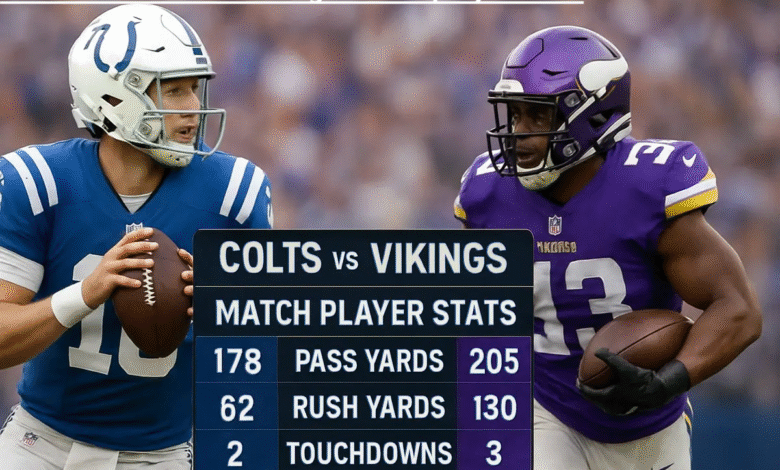
When the Indianapolis Colts vs Minnesota Vikings Match Player Stats off on December 17, 2022, at U.S. Bank Stadium, nobody expected to witness NFL history in the making. What unfolded was the greatest comeback in NFL history—a 39-36 overtime thriller that saw the Vikings erase a 33-point deficit. This comprehensive breakdown examines the Colts vs Minnesota Vikings match player stats, highlighting the individual performances that defined this unforgettable game and the key moments that shifted momentum from a sure Colts victory to a Vikings miracle.
The Historic Context: A Comeback for the Ages
The numbers tell an incredible story. Minnesota trailed 33-0 at halftime and was down 36-7 late in the third quarter. The Vikings became only the second team in more than 1,500 regular-season or playoff games since 1930 to trail by 30 or more points and still win. The previous record belonged to the Buffalo Bills, who overcame a 32-point deficit against Houston in the 1992 postseason. This game shattered even that remarkable benchmark, cementing its place in NFL lore.
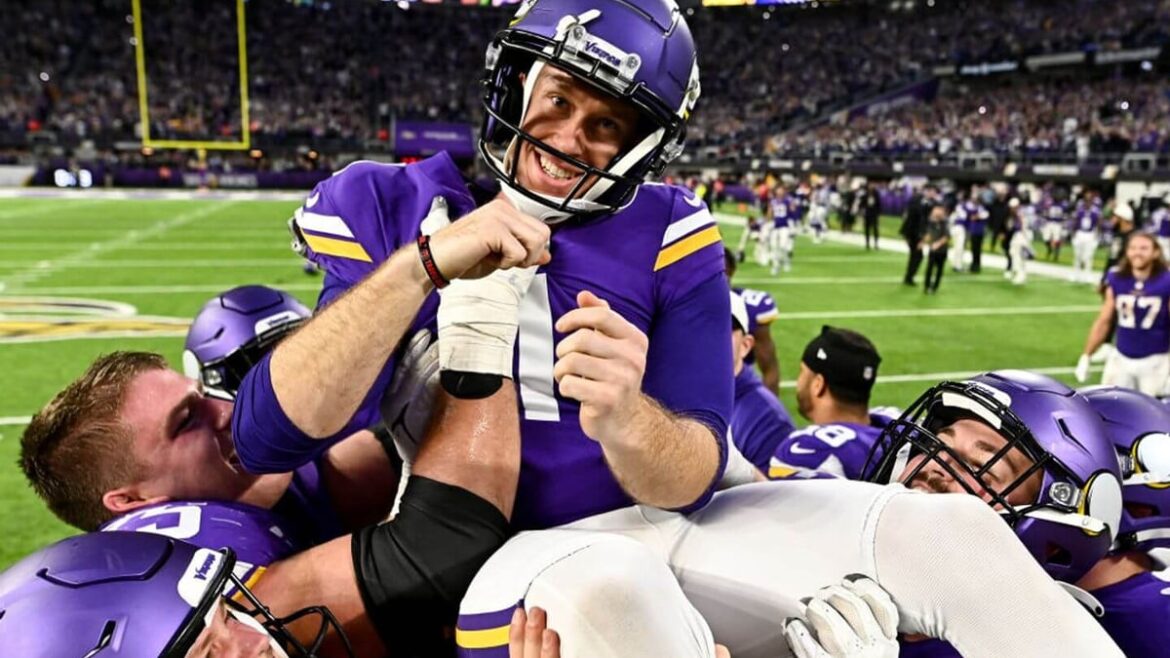
For the Colts, this collapse was heartbreaking. They dominated every phase in the first half, building what seemed like an insurmountable Colts vs Minnesota Vikings Match Player Stats lead. But as the second half unfolded, Minnesota’s offense came alive while Indianapolis couldn’t sustain drives. The final score came on Greg Joseph’s 40-yard field goal with just three seconds left in overtime, clinching the NFC North division title for Minnesota in dramatic fashion.
Kirk Cousins: The Architect of History
Kirk Cousins delivered the performance of a lifetime when his team needed it most. The Vikings quarterback completed 34 of 54 passes for an astounding 460 yards and four touchdowns, though he also threw two interceptions. This wasn’t just a stat-stuffing performance—it was surgical precision when the game hung in the balance. Cousins Colts vs Minnesota Vikings Match Player Stats orchestrated one of the most improbable comebacks in professional sports history, throwing touchdown passes to K.J. Osborn, Adam Thielen, T.J. Hockenson, and Dalvin Cook.
The 460 passing yards marked a career high for Cousins at the time, surpassing his previous best of 458 yards. His passer rating of 99.3 reflected both the volume and efficiency needed to overcome such a massive deficit. What made this performance special wasn’t just the numbers—it was the timing. With his team trailing by 29 points late Colts vs Minnesota Vikings Match Player Stats in the third quarter, Cousins refused to let the game slip away. He connected on crucial third-down conversions, found receivers in tight coverage, and delivered the signature moment when he hit Cook for a 64-yard touchdown on a screen pass that changed everything.
Matt Ryan’s Tale of Two Halves
For Matt Ryan, this game represented another painful chapter in a difficult 2022 season. The veteran quarterback started strong, completing 9 of 15 passes for 118 yards and a touchdown in the first half as the Colts dominated. Ryan looked comfortable in the pocket, the offensive line gave him time, and Indianapolis was executing Colts vs Minnesota Vikings Match Player Stats their game plan to perfection. The opening touchdown came on a swing pass to Deon Jackson, setting the tone for what appeared to be a statement victory.
However, the second half was a completely different story. Ryan managed just 64 passing yards after halftime and overtime combined, finishing 19 of 33 for 182 yards total. The Colts went three-and-out three consecutive times in the second half, with their longest drive covering only 26 yards in six plays. The turning point came on a Colts vs Minnesota Vikings Match Player Stats crucial fourth-and-1 quarterback sneak at the Minnesota 36-yard line with 2:19 remaining in regulation. Ryan was stopped short, and on the very next play, Cousins connected with Cook for that momentum-shifting 64-yard touchdown. For Ryan, who had previously been on the wrong side of Super Bowl LI’s historic collapse with Atlanta, this was another devastating loss to process.
K.J. Osborn: The Receiving Standout
While Kirk Cousins orchestrated the comeback, K.J. Osborn was the primary beneficiary and catalyst. The Vikings receiver posted a career-high 157 receiving yards on 10 receptions, including the first touchdown of Minnesota’s second-half surge. Osborn was Cousins’ safety valve throughout the game, consistently finding soft spots in the Colts’ zone Colts vs Minnesota Vikings Match Player Stats coverage and making contested catches when needed. His ability to get separation and maintain possession through contact kept drives alive when the Vikings desperately needed conversions.
In overtime, Osborn continued to deliver clutch performances. He hauled in a 15-yard reception that helped set up Greg Joseph’s game-winning field goal. Osborn’s route-running precision and reliable hands made him Cousins’ go-to target throughout the comeback, and his 157 yards stood as a testament to both his individual talent Colts vs Minnesota Vikings Match Player Stats and the incredible chemistry he displayed with his quarterback in pressure situations.
Michael Pittman Jr. and the Colts Receiving Corps
On the Colts vs Minnesota Vikings Match Player Stats opposite side, Michael Pittman Jr. led the Colts receivers with 10 receptions for 60 yards. While his catch total matched Osborn’s, the yardage differential tells the story of two very different offensive approaches. Pittman was targeted frequently as the Colts tried to control the clock and maintain their lead, but the lack of explosive plays in the receiving game became problematic. Indianapolis couldn’t stretch the field vertically in the second half, allowing Minnesota’s defense to Colts vs Minnesota Vikings Match Player Stats creep closer to the line and disrupt the passing rhythm.
The Colts’ receiving group as a whole struggled to create separation as the game wore on. Without big plays downfield, Indianapolis became predictable, and the Vikings’ defensive adjustments suffocated their offensive flow. This stands in stark contrast to Minnesota’s receiving attack, which featured multiple receivers making game-changing plays when it mattered most.
The Running Game Battle: Cook vs. Moss
The ground game provided an interesting contrast in this matchup. For the Colts, Zack Moss carried the load with Jonathan Taylor sidelined, rushing 24 times for 81 yards. Moss provided steady, reliable yardage between the tackles Colts vs Minnesota Vikings Match Player Stats and helped Indianapolis dominate time of possession early. His 4.0 yards per carry average was solid but not spectacular, and crucially, the Colts couldn’t generate game-breaking runs when they needed to ice the game away.
Dalvin Cook, meanwhile, finished with 17 carries for 95 yards and that pivotal 64-yard receiving touchdown. His 3.8 yards per rush average was actually lower than Moss’s, but Cook’s impact transcended traditional rushing statistics. He totaled 190 all-purpose yards, serving as both a runner and receiver out of the backfield. That screen pass touchdown wasn’t just about the yards—it was about timing and momentum, and Cook’s ability to turn a Colts vs Minnesota Vikings Match Player Stats simple play into a house call exemplified his game-breaking capability.
Adam Thielen and T.J. Hockenson: The Secondary Weapons
Adam Thielen’s contributions were crucial to Minnesota’s second-half explosion. He caught the second of Cousins’ three fourth-quarter touchdown passes, providing a veteran presence and reliable target when the offense needed to find rhythm. Thielen’s ability to work the middle of the field and convert on critical third downs kept drives moving Colts vs Minnesota Vikings Match Player Stats forward. In overtime, his 21-yard reception helped set up the game-winning field goal attempt.
T.J. Hockenson also played a pivotal role, particularly on the game-tying two-point conversion after Cook’s touchdown. Hockenson’s size and catching radius made him a valuable red-zone threat, and his conversion gave the Vikings new life heading into overtime. These complementary weapons around Cousins demonstrated Colts vs Minnesota Vikings Match Player Stats Minnesota’s offensive depth and versatility.
Defensive Standouts: Kendricks and Okereke
The linebacker matchup featured two productive performers despite the offensive fireworks. Eric Kendricks recorded 12 tackles for Minnesota, with seven solo stops. His emotional post-game interview, where he wiped away tears discussing the comeback, captured the magnitude of the moment. Bobby Okereke matched Kendricks with 12 tackles for Indianapolis, providing consistent tackling throughout despite being Colts vs Minnesota Vikings Match Player Stats unable to slow down the Vikings’ second-half surge.
On the defensive line, Danielle Hunter notched 1.5 sacks for Minnesota, while Dayo Odeyingbo recorded 2 sacks for the Colts. However, the defensive performances were ultimately overshadowed by the offensive explosion that characterized this historic game.
Special Teams Disasters and Game-Changing Moments
The Vikings’ special teams unit started disastrously and nearly cost them any chance at a comeback. Dallis Flowers returned the opening kickoff 49 yards, immediately putting the Colts in scoring position. Then came the blocked punt—Ifeadi Odenigbo broke through and deflected Ryan Wright’s punt, which JoJo Domann recovered and Colts vs Minnesota Vikings Match Player Stats returned 24 yards for a touchdown, giving Indianapolis a quick 10-0 lead.
Perhaps most embarrassing was the failed fake punt. With Minnesota trailing 20-0 on fourth-and-1 from their own 31-yard line, Wright attempted a pass to Jalen Nailor that sailed over his head, resulting in a turnover on downs. These early special teams blunders dug a hole that seemed impossible to escape. The irony of Odenigbo later being penalized for delay of game in overtime—lying on Justin Jefferson to prevent the Vikings from setting up the winning field goal—added another layer to the special teams narrative.
The Statistical Domination That Wasn’t Enough
Looking at the team statistics reveals how thoroughly the Vikings dominated once they found their rhythm. Minnesota amassed 518 total yards compared to Indianapolis’s 341. The Vikings recorded 32 first downs against the Colts’ 20, and averaged 6.0 yards per play compared to just 4.3 for Indianapolis. Minnesota passed for 426 Colts vs Minnesota Vikings Match Player Stats yards while the Colts managed only 170 through the air.
What’s remarkable is that despite these overwhelming numbers in Minnesota’s favor, the Colts still held a time of possession advantage—36:37 to 33:20. Indianapolis ran 79 plays to Minnesota’s 86, yet couldn’t capitalize on their early control. The turnover battle favored Indianapolis 3-1, but even two interceptions from Cousins couldn’t prevent the comeback. The red zone efficiency told the final story: Minnesota converted 4 of 4 trips inside the 20 while Indianapolis managed just 1 of 4.
The Comeback Sequence: Quarter by Quarter
The first quarter saw Indianapolis jump to a 17-0 lead through opportunistic scoring and special teams dominance. The second quarter brought more of the same, with the Colts extending to a 33-0 halftime advantage—the second-largest Colts vs Minnesota Vikings Match Player Stats halftime lead in the NFL that season. Chase McLaughlin connected on field goals from 26, 28, and 49 yards, going a perfect 5-for-5 on the day with kicks from various distances including a long of 52 yards.
The third quarter began the shift. Minnesota finally got on the board, cutting the deficit to 33-7, then 36-7. But the Colts still appeared in control. The fourth quarter was pure chaos. Cousins found his rhythm, the Vikings defense tightened, and suddenly the impossible seemed possible. Three fourth-quarter touchdown passes—to Osborn, Thielen, and then Cook’s game-tying 64-yarder with the crucial two-point conversion—brought the score to 36-36 and forced overtime.
Overtime Drama and the Final Moments
In overtime, both teams had opportunities, but Minnesota’s offense was simply unstoppable by that point. On their second Colts vs Minnesota Vikings Match Player Stats overtime possession, Cousins methodically moved the Vikings downfield. He connected with Osborn for 15 yards, found Thielen for 21, and hit Jefferson for 13 yards to move into field goal range. The Odenigbo penalty on Jefferson moved the ball even closer, giving Joseph a 40-yard attempt instead of 45.
When Joseph’s kick sailed through the uprights with three seconds remaining, it completed not just a comeback, but a transformation. The Vikings clinched the NFC North division title and finished the season 11-3, while the Colts fell to 4-9-1. For Matt Ryan, it marked his final NFL appearance, as coach Jeff Saturday announced Nick Foles would start the remaining games. For Cousins, it was redemption and validation—he was named Colts vs Minnesota Vikings Match Player Stats NFC Offensive Player of the Week and added another chapter to his legacy of leading game-winning drives.
The Aftermath and Historical Significance
This game represented more than just a regular-season victory. Minnesota became just the third team in league history to win 10 games in a season by eight points or fewer, showcasing their resilience and ability to win close games throughout 2022. The Vikings’ eight game-winning drives that season tied the NFL record for a single season, matching Matthew Stafford’s 2016 campaign.
For the Colts, the collapse exposed deeper issues. They had been outscored 33-0 in the fourth quarter of their previous game (a 54-19 loss to Dallas) and were now on the wrong end of history. The inability to close games and maintain leads plagued Indianapolis throughout the season, contributing to their disappointing 4-9-1 finish. Interim coach Jeff Saturday’s decision to go for it on fourth down late in the game, while aggressive, backfired spectacularly and became a talking point for weeks.
Lessons From the Player Stats and Performances
The Colts vs Minnesota Vikings match player stats reveal several critical lessons. First, momentum is real and devastating when it shifts. The Vikings’ confidence grew with each successful drive, while the Colts visibly tightened up. Second, quarterback performance under pressure separates good from great. Cousins’ ability to deliver accurate passes despite two earlier interceptions showed mental toughness that Ryan couldn’t match in the second half.
Third, explosive plays matter more than sustained drives when trailing significantly. Cook’s 64-yard touchdown changed everything instantaneously, while the Colts’ methodical approach in the second half yielded minimal results. Finally, depth at the skill positions provides options when defenses adjust. Minnesota could Colts vs Minnesota Vikings Match Player Stats spread the ball to Osborn, Thielen, Hockenson, Jefferson, and Cook, making them nearly impossible to stop once they found rhythm.
Conclusion: A Game That Transcends Statistics
While the Colts vs Minnesota Vikings match player stats tell a compelling numerical story—460 passing yards for Cousins, 157 receiving yards for Osborn, 190 all-purpose yards for Cook—they can’t fully capture the emotional rollercoaster and historical significance of this game. The numbers provide the framework, but the heart-stopping drama, the jubilant Vikings celebrations, and the devastated Colts players revealed what really mattered: resilience, execution in crucial moments, and the unpredictable nature of professional football.
This game will be replayed for generations as an example of why you never give up, why no lead is safe, and why individual performances matter most when the stakes are highest. From Cousins’ career-defining comeback to Ryan’s crushing defeat, from Osborn’s career day to the special teams disasters that nearly doomed Minnesota, every statistical category contributed to a masterpiece of competitive drama. The Colts vs Minnesota Vikings match player stats aren’t just numbers—they’re the building blocks of NFL legend.